
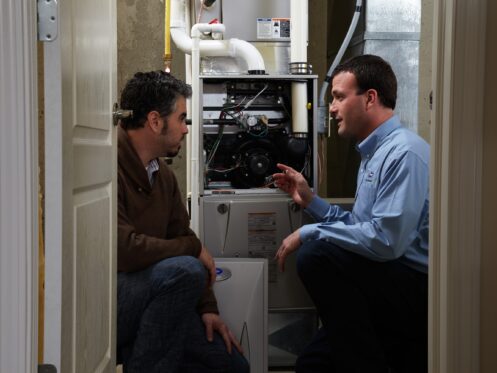
Approximately 60% of U.S. households get their home heating via a forced-air furnace. Among that group, more than 50% have a fuel-fired furnace that burns natural gas, liquid propane, or heating oil. The others have an electric furnace instead, and those statistics indicate that both options are viable throughout much of the country. Let’s explore the pros and cons of each approach to determine which one is best for your home.
Initial vs. Long-Term Costs
Electric furnaces are typically the less expensive heating option, at least initially. The furnaces are cheaper because they require less equipment, and the installation is less expensive because it’s simpler. Despite that, fuel-burning furnaces tend to be more cost-effective over the life of the system. That’s because the cost of fuel is substantially lower than the cost of electricity throughout most of the country. Something else to consider is the availability of energy incentives. Rebates and tax credits tend to be bigger for gas furnaces than those available for electric furnaces.
Comfort
Gas furnaces typically deliver air between 120°F and 140°F, while electric furnaces tend to produce air closer to 95°F to 105°F. Because gas furnaces blow warmer air, they often feel more powerful and heat rooms faster, even though both systems can ultimately maintain the same indoor temperature.
Equipment Lifespans
Gas furnaces tend to last between 15 and 20 years, while electric furnaces last between 20 and 30 years. Electric furnaces are more convenient in the sense that you don’t have to replace them as often. What’s interesting is that gas furnaces beat electric furnaces in total value despite the shorter lifespans.
Fuel Availability
Natural gas is the preferred option for fuel-fired furnaces because it’s the cheapest and most convenient. Yet, it requires access to a natural gas line, and that depends on where you live. Liquid propane and heating oil are the top alternatives to natural gas. Those options aren’t as cheap, but they will still be more affordable than running an electric furnace. The consideration with them is that you have to store the fuel in a tank and schedule deliveries.
Safety Considerations
Electric furnaces are generally the safer option. While there’s a risk of fire with all furnaces, such incidents are uncommon with modern technologies. The significant consideration with fuel-fired furnaces is that they create toxic gases as a byproduct of combustion. A well-functioning system will vent those gases outside the home, but malfunctions can cause seepage into the living space. That’s why most local building codes require homes to have adequate carbon monoxide detector coverage. Additionally, most experts recommend high-efficiency furnaces for safety reasons. They have sealed combustion chambers that are less prone to leakage.
Maintenance Requirements
All furnaces require annual seasonal maintenance. Most furnace warranties require it as a condition of coverage. Tune-ups also improve energy efficiency, lower operating costs, prevent repairs, and extend equipment lifespans, among other benefits. That said, seasonal maintenance is more crucial for fuel-burning systems due to the safety considerations discussed. Maintenance for combustion systems is also more involved, which means it takes longer and usually costs more.
Environmental Factors
If your top concern is your household’s carbon footprint, electric is generally the better choice. A standard fuel-fired furnace is about 80% efficient, which means it wastes 20% of the fuel it burns. All electric furnaces on the market are close to 100% efficient. It’s worth noting that there are high-efficiency gas furnaces that offer up to 98.5% efficiency. Still, such models will be considerably more expensive than a standard electric furnace.
The Heat Pump Consideration
If you’re leaning toward an electric furnace, it’s important to compare it to a heat pump. Heat pumps are even more efficient because they use electricity to move heat energy rather than generate it. That makes them much cheaper to run throughout much of the winter. Additionally, the rebates and federal tax credits are generally much bigger for heat pumps than furnaces. There are efficiency concerns with standard heat pumps at nighttime in cold climates. One way to overcome them is a hybrid setup that pairs a primary heat pump with an auxiliary furnace. That approach will cost more initially, but it can save significant money over the years.
Professional Heating System Selection Guidance Throughout Vanderburg County
Since 1977, G. R. Freeman Heating & Air Conditioning, Inc. has been a local HVAC company based in Evansville, IN. We provide furnace installation consultations at no cost and without obligation. During that appointment, we can help you choose the ideal furnace for your home and budget. We can also help you explore rebates, financing subject to credit approval, and many other factors. To schedule that consultation, call today or contact us online.